Journal · Design
Charred timber, jade water.
The few materials Ocean Palm is made of, and what each one is asked to do — dark outside, warm within, arranged around one line of water.
Some houses are best explained room by room. Ocean Palm is easier to understand through its materials — a handful of them, used again and again, each given one job to do.
Dark, on the outside.
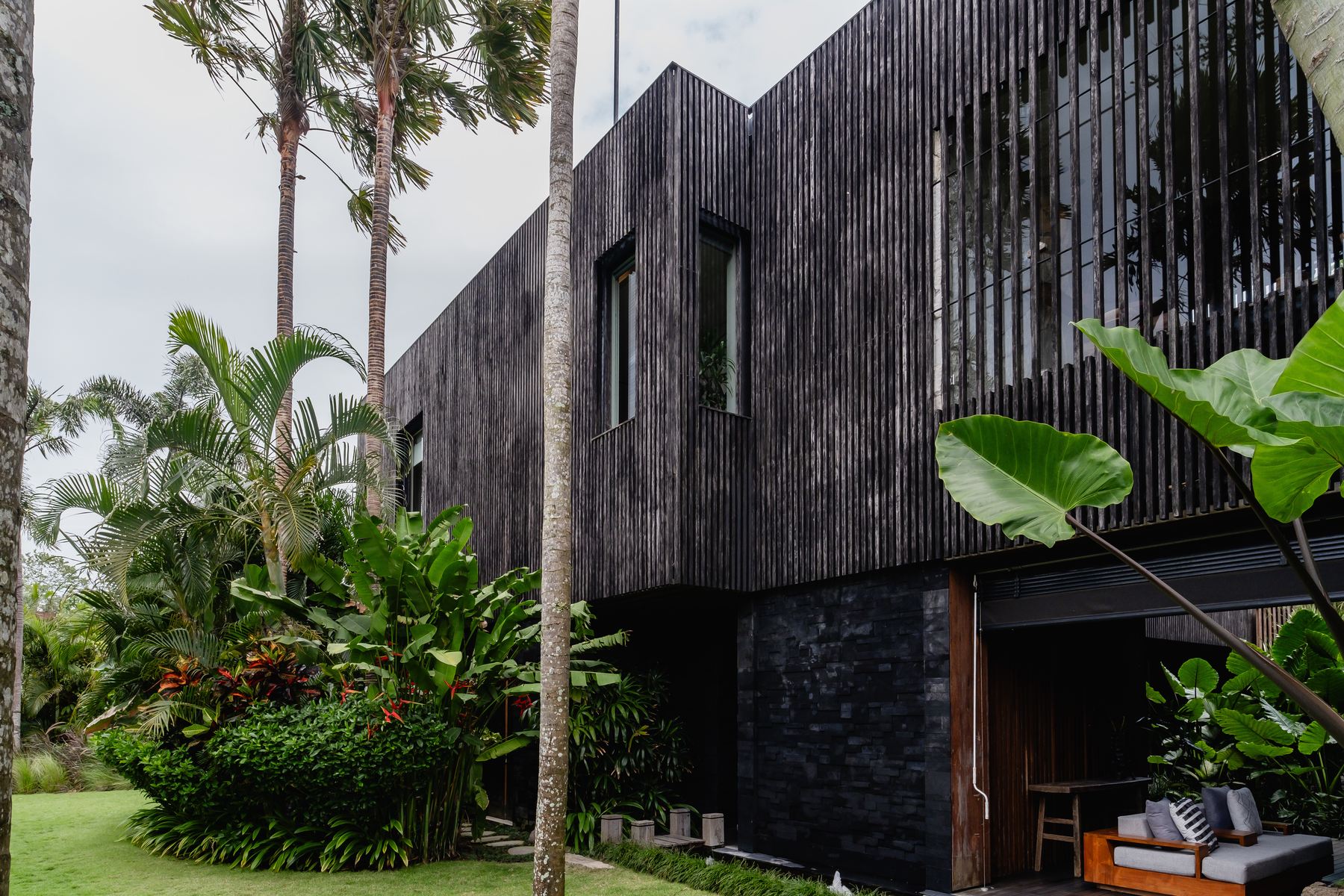
From the lane, the house shows a wall of charred-timber screens behind palms. It does what a wall in a village should: it keeps its counsel. Nothing on the outside announces what is behind it.
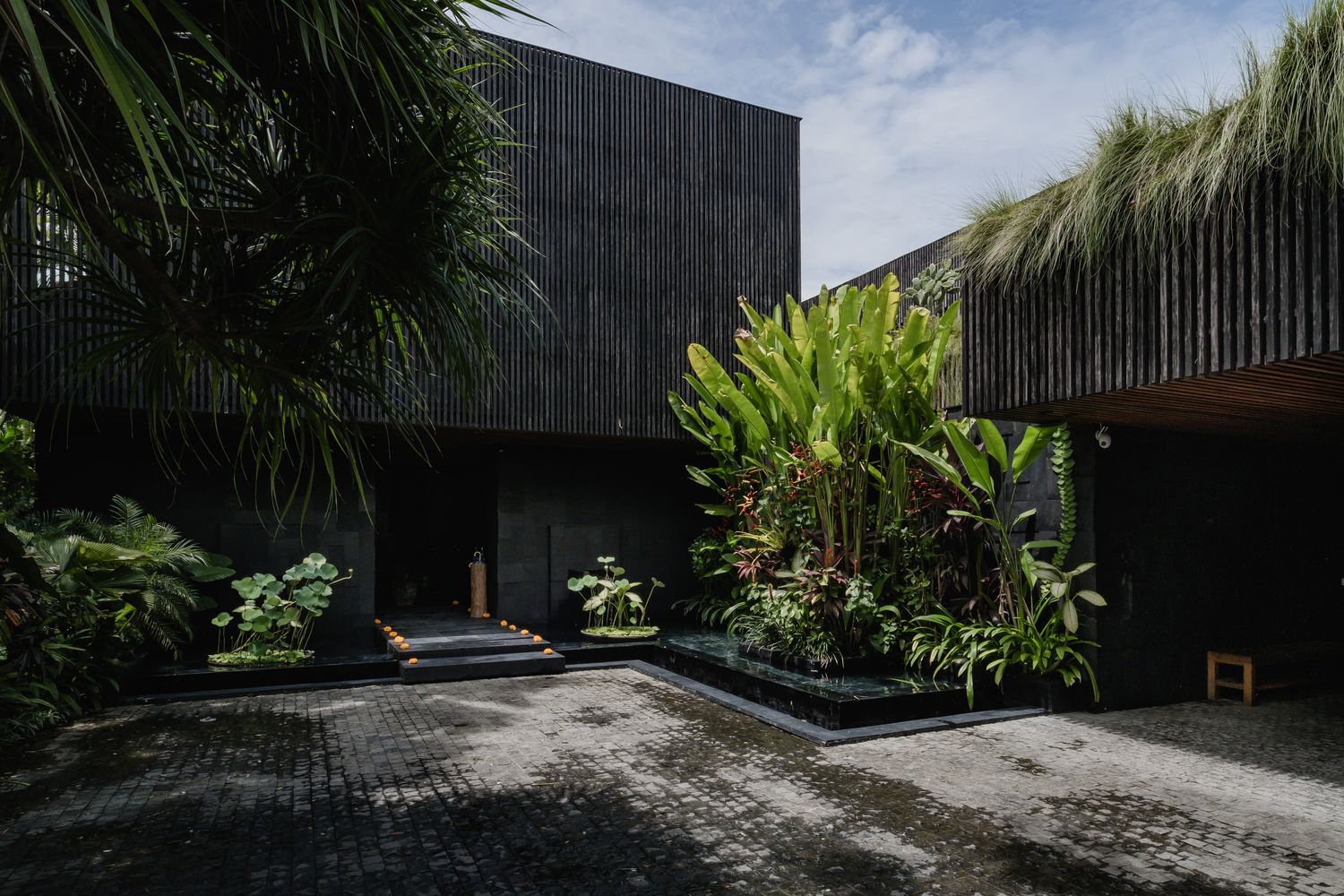
Stone gives the entrance its weight. A dark stone threshold opens onto a covered walkway of flat slabs laid across shallow water, with carved figures keeping watch on either side and lily ponds in the entrance court. The sound of the lane ends there.
One line of water.
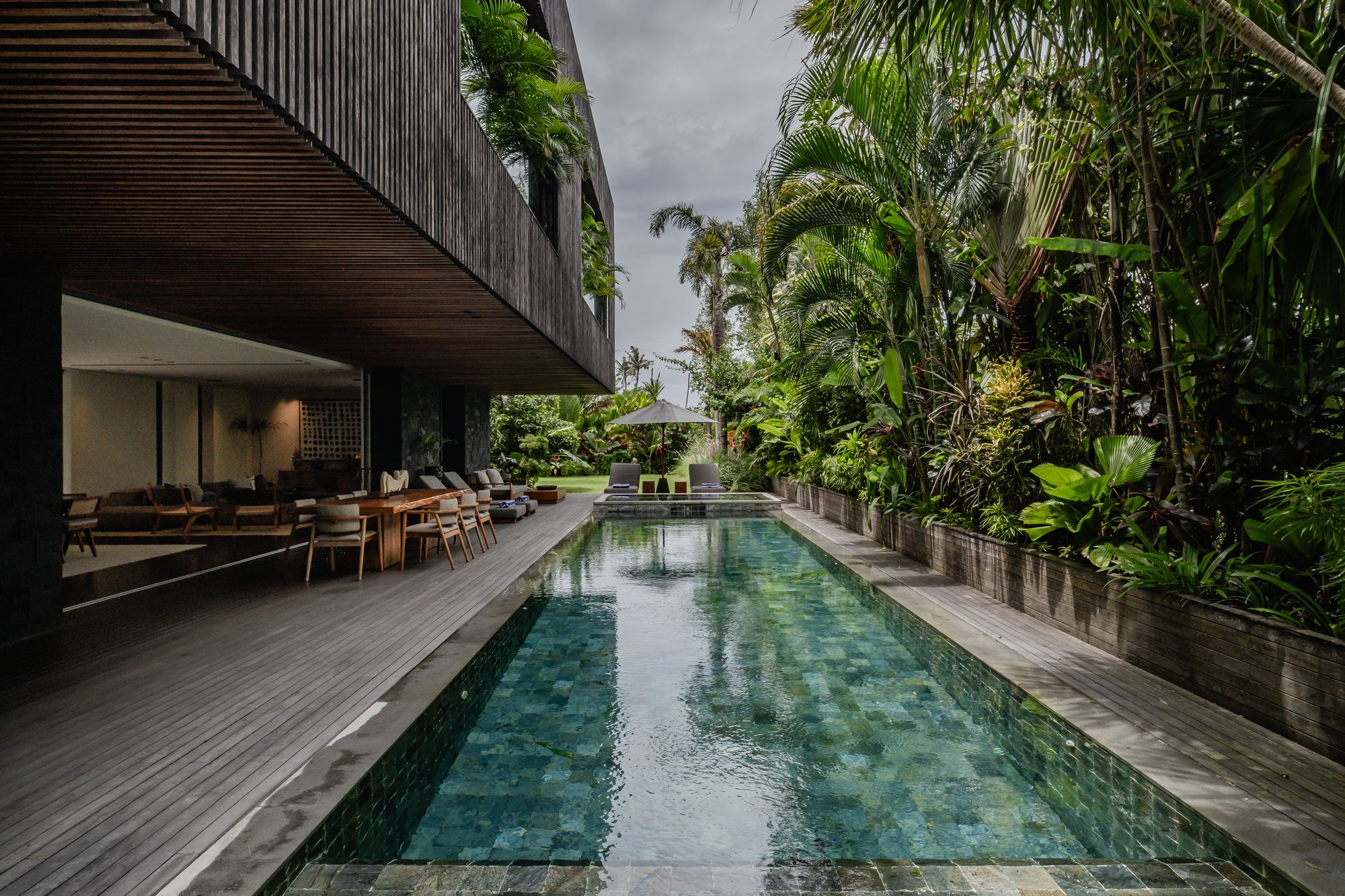
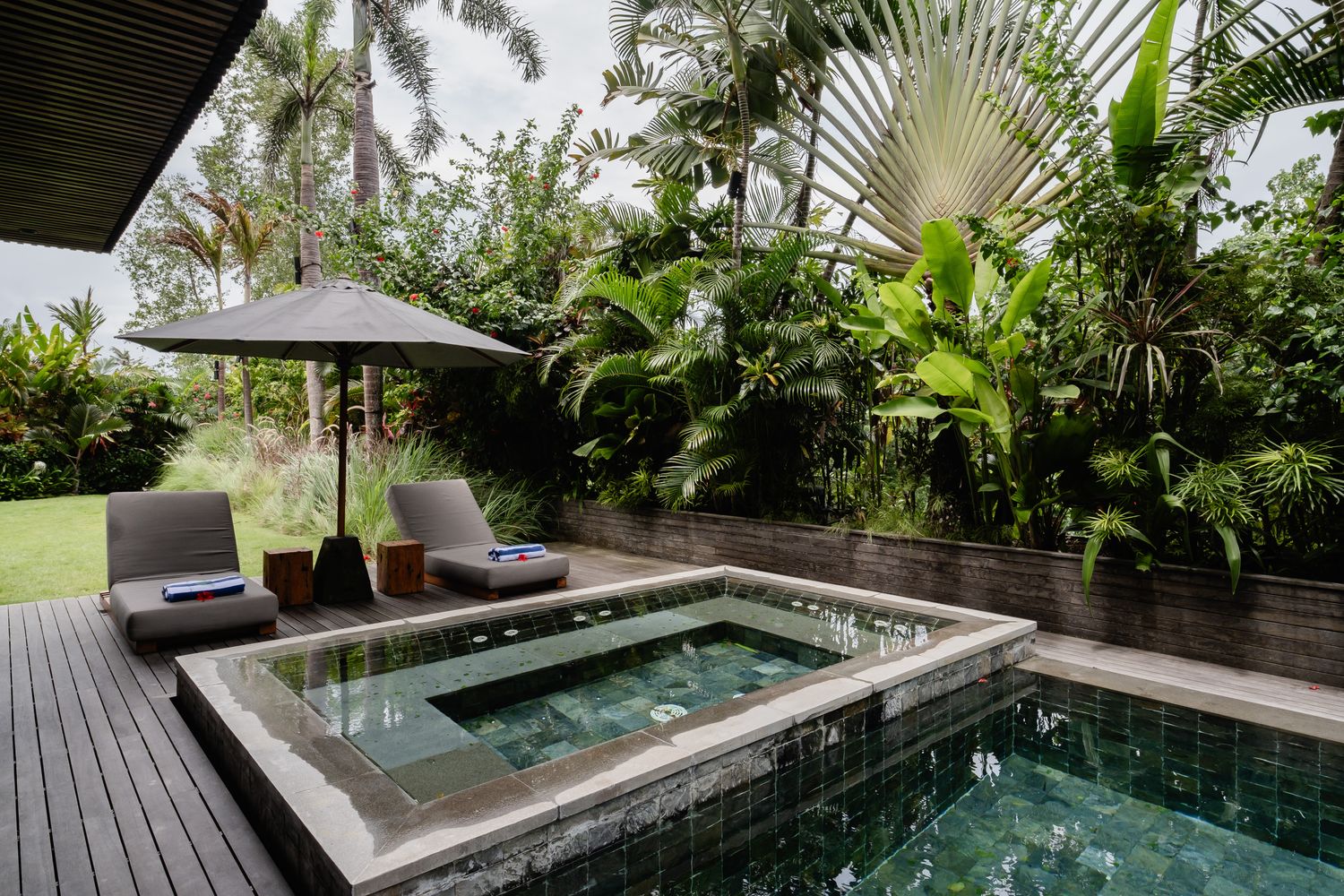
Inside the wall, jade tile runs the length of the timber deck, with the planting pressed close along its far edge, and a jetted spa pool sits a step above it. Everything else in the house is arranged around this one line of water.
Warm, within.
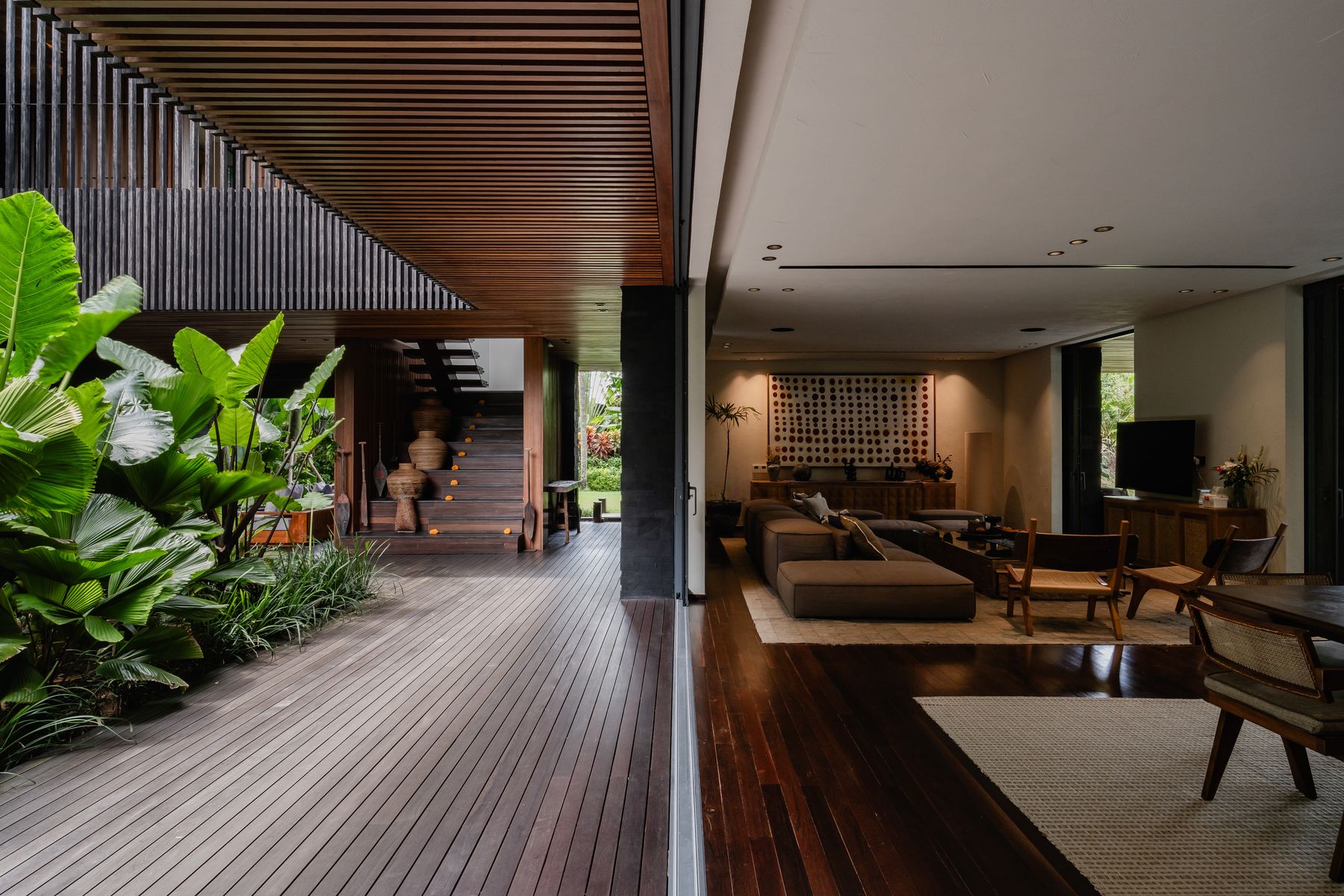
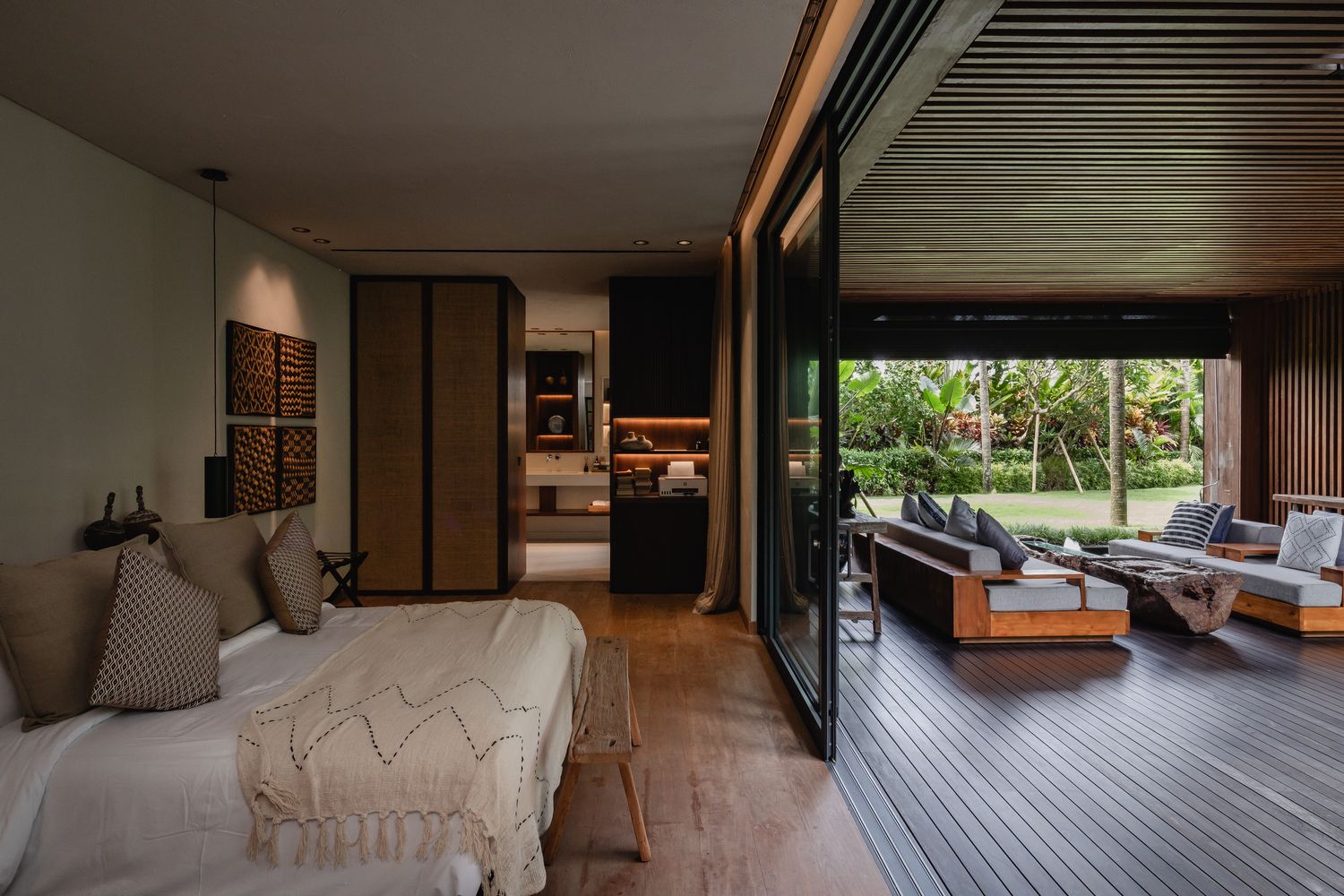
Timber returns throughout — the charred screens outside, the ceilings and floors within. In the rooms it is joined by linen, rattan and teak, which give the interiors their warmth against the dark frame.
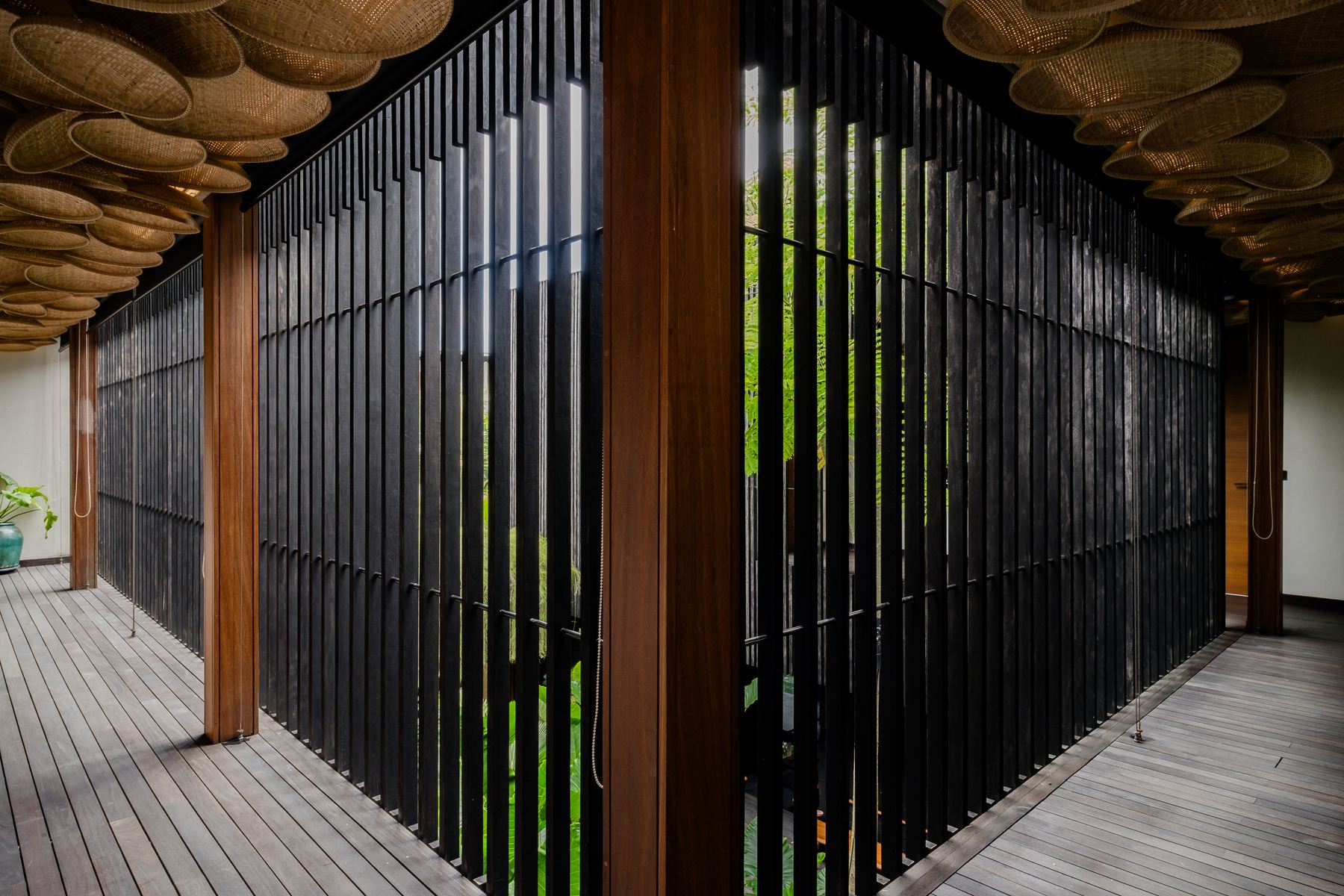
The passages between rooms are made of the same things. A slatted walkway runs beneath a rattan ceiling, a covered deck sits behind a slatted screen, and in the living rooms the light comes in from two sides.
Rooms without a fourth wall.
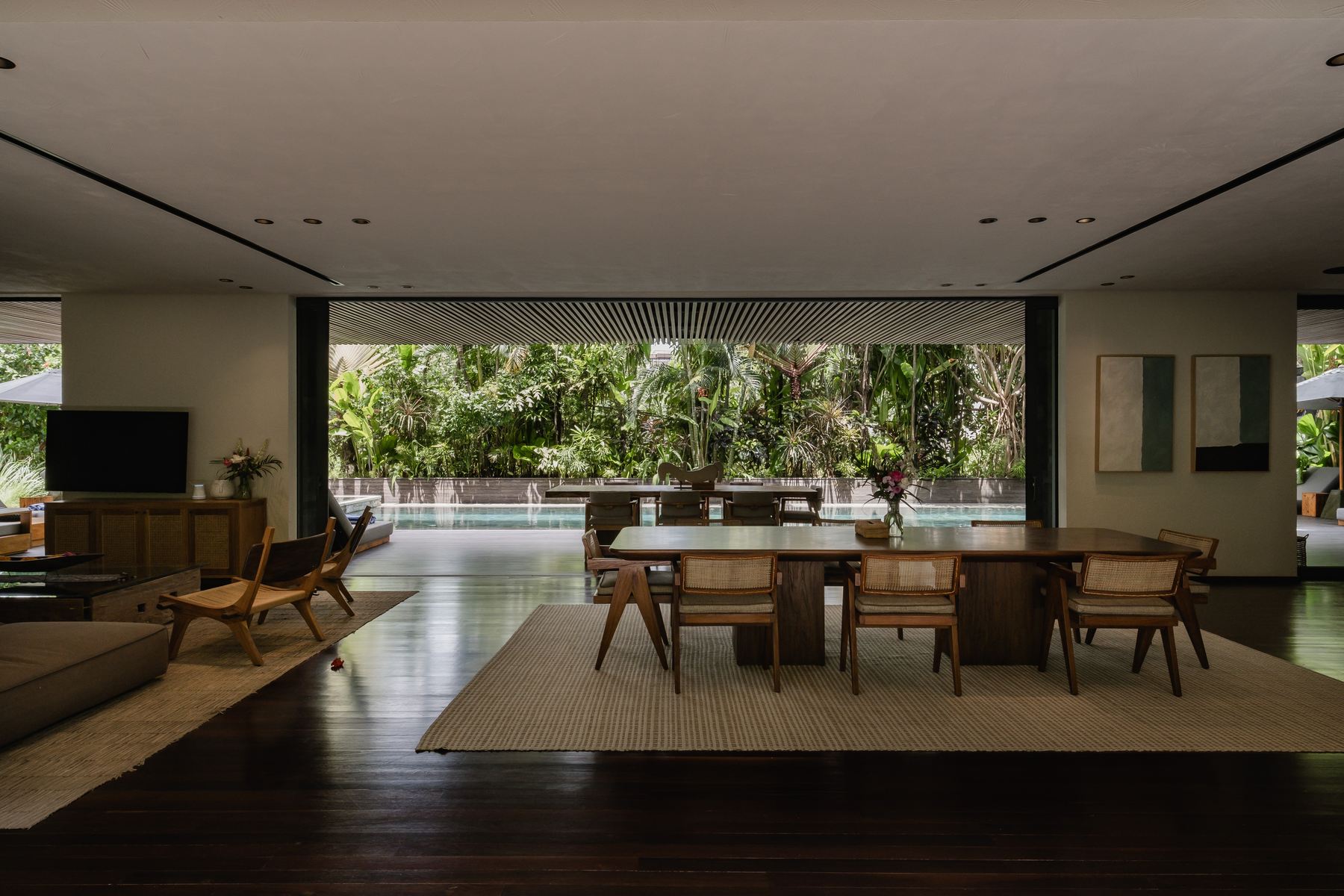
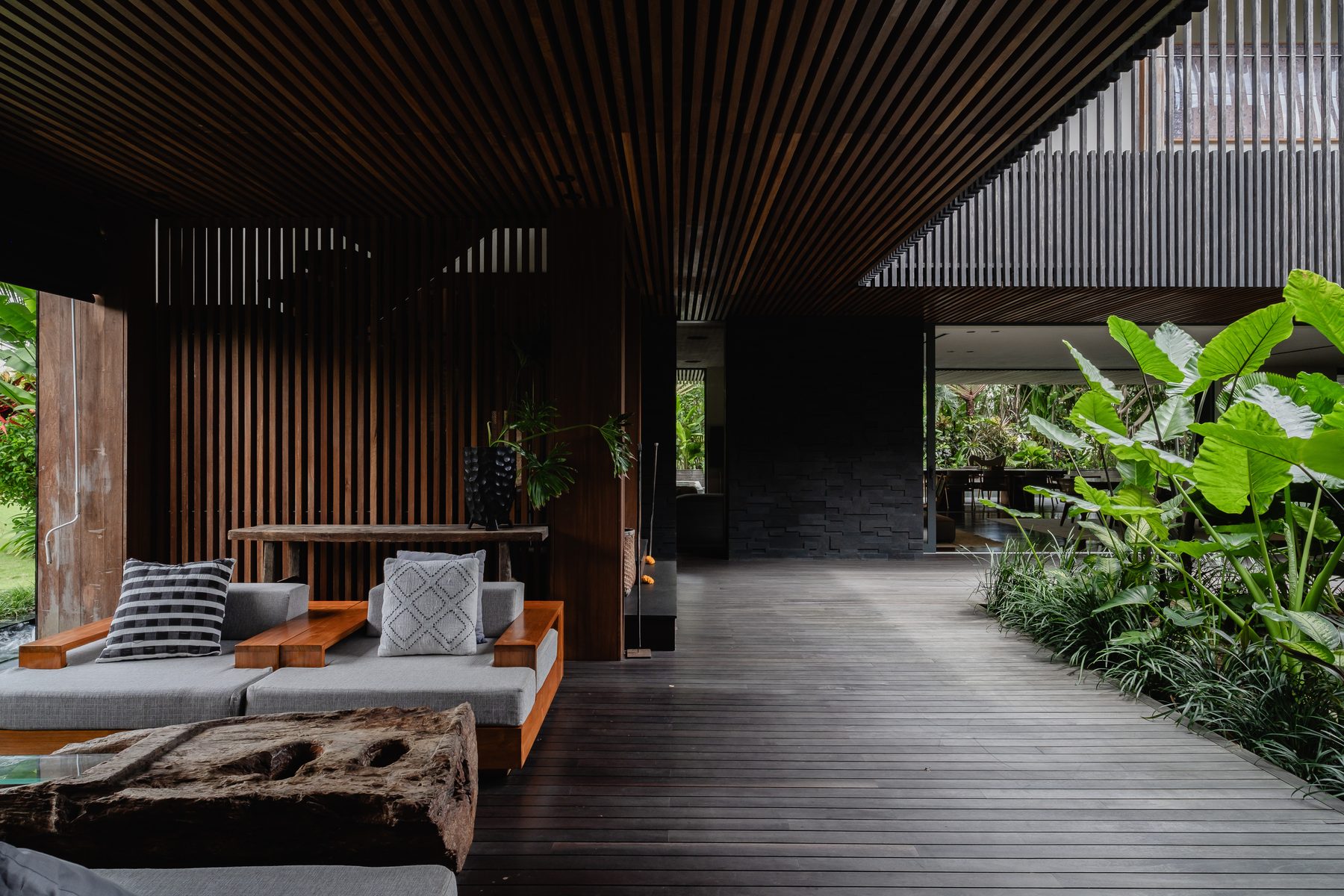
The living pavilions are built open. Sliding panels fold away until the seating, the long table and the garden become a single, continuous room.
The bedrooms take the same idea and make it private. Each one opens onto its own terrace or courtyard, with glass on two sides and timber underfoot — the green close enough to touch from the bed.
Dark outside. Warm within.